Green & Sustainable Living Features at Godrej Bannerghatta — An In-Depth Look
Discover the eco-friendly highlights of this luxury township, from the 25-acre forest canopy to smart water and solar integration.
Sustainability has become a standard talking point in real estate marketing. Almost every new project claims to be "eco-friendly" or "green." So what does it actually mean when Godrej Bannerghatta says 70% of its 36-acre campus is dedicated to open green space — and what other sustainable features does the project incorporate?
This article gives you a clear, factual breakdown.
The 70% Open Space Commitment — By the Numbers
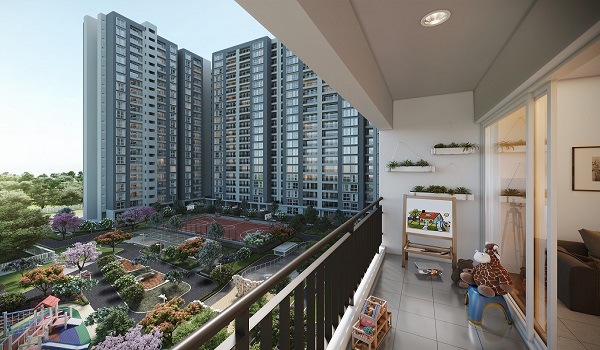
With 70% open space over a 36-acre site, the project preserves approximately 1,01,500 sq. metres of non-built-up land. This dense vegetation provides multiple microclimate and environmental advantages:
- Microclimate regulation: Plants and water features absorb heat, keeping the campus temperature measurably cooler than congested surrounding streets.
- Air Quality: Dense perimeter planting and themed gardens act as a natural particulate filter.
- Sound Buffering: Large green belts diffuse traffic noise, preserving peaceful living environments on the inner campus.
Water Management and Conservation
Responsible water management is a critical feature, particularly in Bangalore. Godrej Bannerghatta incorporates several smart water conservation measures:
- Rainwater Harvesting: Large-scale collection and storage systems for rooftop and surface runoff.
- Sewage Treatment Plant (STP): Advanced tertiary STP processing, with recycled water used exclusively for flushing and landscape irrigation.
- Drip Irrigation: Automated drip irrigation for green spaces, reducing water use by up to 50% compared to conventional watering.
Energy Efficiency Measures
- Solar Panels: Common area rooftop solar panels to power shared lighting, elevator loads, and clubhouse energy requirements.
- LED Lighting: Full LED arrays throughout basement, corridors, and landscape areas to minimize grid power consumption.
- Regenerative Elevators: Energy-efficient elevator systems that capture energy during descent and feed it back into the building grid.
- Orientation: Well-designed layouts oriented to maximize natural daylight and cross-ventilation.
Waste Management
The campus practices source segregation and operates organic waste composting units to recycle leaf litter and wet waste into organic fertilizers for the campus landscape.